Utopia Native Title Win: Traditional Owners Celebrate 'Special Country' and the Meaning of Justice
A native title decision invites reflection on dignity, truth, and the foundation of justice.
Infolitico
On the press
The edition is loading.
A native title decision invites reflection on dignity, truth, and the foundation of justice.
A concise digest of source-backed Infolitico stories when the day has a truthful slate. Thin mornings are skipped rather than padded.
Righteousness and justice are the foundation of your throne. Unfailing love and truth walk before you as attendants.
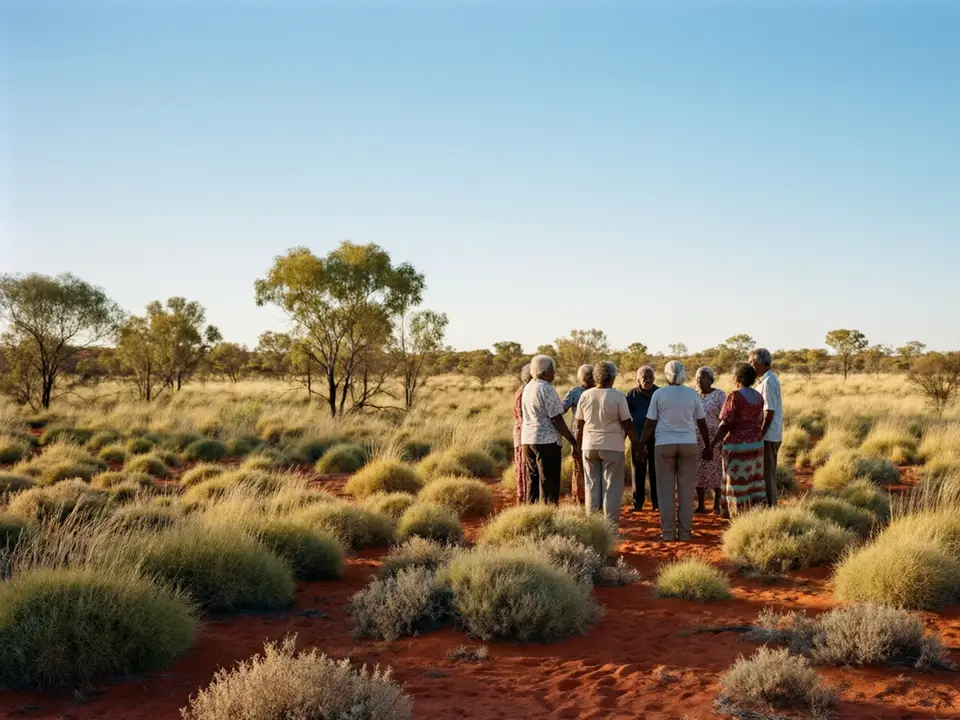
Traditional owners from the Utopia region are celebrating a native title win over land described as special country. The publicly available post does not include quotes, dates, or detailed terms of the native title decision, so the reported facts are limited to the celebration, the legal recognition, and the description of the land.
The central question is not only whether a legal process reached an outcome, but what kind of recognition that outcome represents. Traditional owners are celebrating a native title win, and the land is described as special country. Those two details pull together a tension: a court or government decision can settle a claim, while the people most affected may be speaking about relationship, memory, and belonging. Justice, in this setting, is not merely a file closed. It is an acknowledgment that a place carries meaning that cannot be reduced to boundaries.
That tension matters because the source does not give the full history, the terms of the win, or proof that every related harm has been addressed. We should not treat one reported celebration as the end of a larger story. Still, the language of special country suggests that the event touches something deeper than ownership. It asks whether our ideas of justice can tell the truth about people's dignity and attachment to place, rather than only assigning rights.
Psalm 89:14 pictures God's throne as founded on righteousness and justice, with unfailing love and truth walking before Him. That image does not say every human ruling is final or complete. It does show that real justice is never merely procedural. When love and truth attend a decision, recognition becomes more than permission; it becomes a form of honor. The invitation for us is to support forms of justice that do more than resolve disputes — forms that tell the truth about who people are and where they belong.
This Daily Reflection keeps the reported event, faith reflection, Scripture, and automation record distinct.
