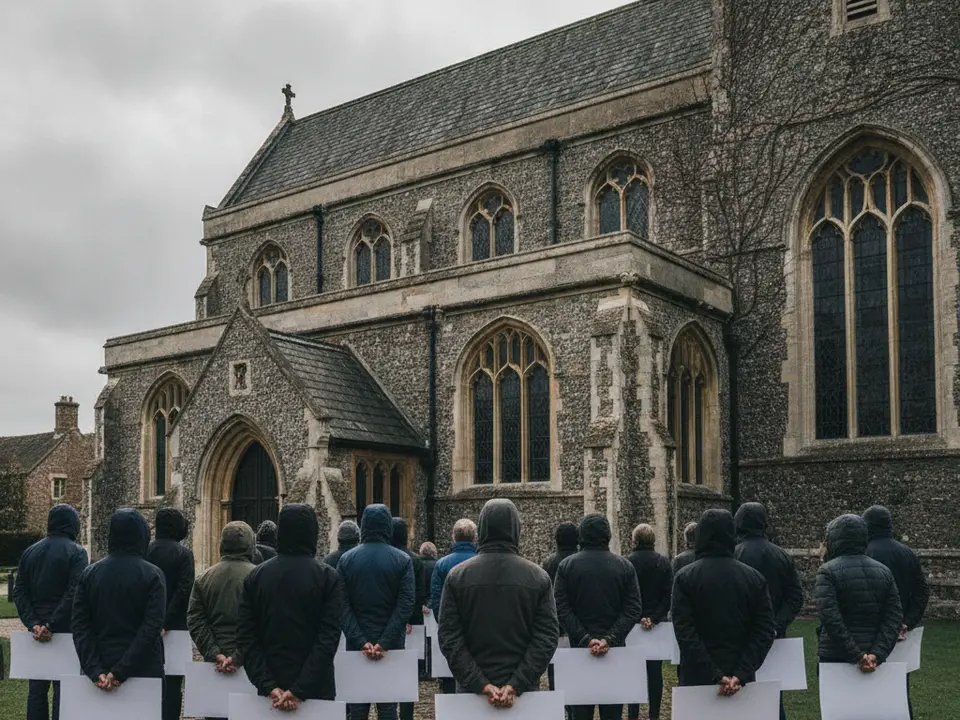
The protest is not only about a church vote. It shows how hard it is to respond to catastrophic suffering without either shrinking from it or speaking beyond what can be proven. UK Christians are asking the General Synod to engage Kairos Palestine II, and they are asking the church to recognise genocide in Gaza. A motion can be drafted and voted on; a genocide finding requires evidence beyond a protest's demand.
Psalm 89:14 does not soften the demand for justice. It places justice at God's throne, then sets unfailing love and truth walking before Him. The picture is not justice alone, marching unchecked. It is justice attended by love and truth. That means a faithful response to Gaza cannot be mere accusation, and it cannot be indifference either. The verse does not verify the protesters' claim, decide the Synod's vote, or settle contested facts on the ground. It does challenge the posture behind our speech.
When horror arrives from far away, we often choose between looking away and claiming total certainty. The psalm offers a harder path: grieve seriously, speak honestly, and let love keep us from cruelty. We can ask whether our own words about Gaza are shaped by truth and compassion, or by slogan, fear, and the need to sound resolved before the evidence is clear.