Correction notice
This story has been corrected
The image was updated to a relevant licensed file photograph. Article text is unchanged.
Posted November 3, 2026.
Read our corrections policy.
Infolitico
On the press
The edition is loading.
Correction notice
The image was updated to a relevant licensed file photograph. Article text is unchanged.
Posted November 3, 2026.
Read our corrections policy.
As two governments wait for the other to blink, a familiar command asks who is willing to go first.
A concise digest of source-backed Infolitico stories when the day has a truthful slate. Thin mornings are skipped rather than padded.
But I say, love your enemies! Pray for those who persecute you!
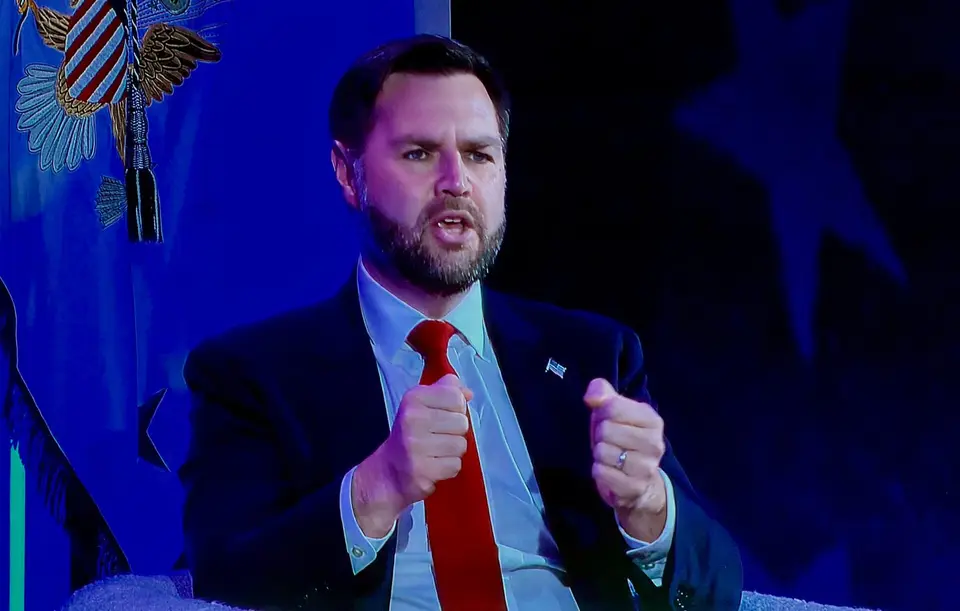
Vice President Vance sent a letter to Iran's national security chief, Mohsen Rezaei, stressing that any negotiations to head off U.S. military strikes would need to address Iran's nuclear program, according to a U.S. official. It is the most senior-level outreach by the U.S. to Iran in several months.
The letter comes as President Trump considers resuming major combat operations in Iran after the midterm elections. Rezaei has a direct line to the Supreme Leader. A key sticking point remains: Iran demands the U.S. first lift its naval blockade, release frozen funds, and allow oil sales, while the U.S. wants Iran to restart nuclear negotiations before receiving any sanctions relief.
Look closely at the letter and you find a sequencing problem: two governments, each insisting the other must move first. Iran wants relief before talks. The U.S. wants talks before relief. Which means the only way anything begins is for someone to act without a guarantee.
That is the real tradeoff inside this outreach. The letter was sent while military action remains under consideration — it is not a resolution of the standoff but a choice made under pressure, an opening extended before anything was owed. And we should be honest about the limits: a letter does not settle the nuclear dispute, does not prove either government's demands are right, and does not mean the danger has passed. Ordinary Iranians are still living under a blockade, and families here still live with the possibility of war.
Yet there is something worth noticing about how paths out of conflict actually open. Trust, concessions, and guarantees are all absent on both sides — and the first step gets taken anyway. Most of us know this standoff in miniature. A marriage where both people are waiting for an apology. A family rift where each side feels the other owes the call. A friendship gone cold where pride keeps the phone silent. In each case, nothing moves until someone acts unilaterally.
This is where the verse cuts deeper than diplomacy. Love for an enemy is not a reward earned by the other side's good behavior; it is an orientation we choose before any agreement exists. It asks us to go first — to pray for the person we would rather petition against. One small, unreciprocated gesture of goodwill toward the person we're waiting on might be the whole door.
This Daily Reflection keeps the reported event, faith reflection, Scripture, and automation record distinct.
